
Review: ‘Beauty and the Beast’ The Complete Series
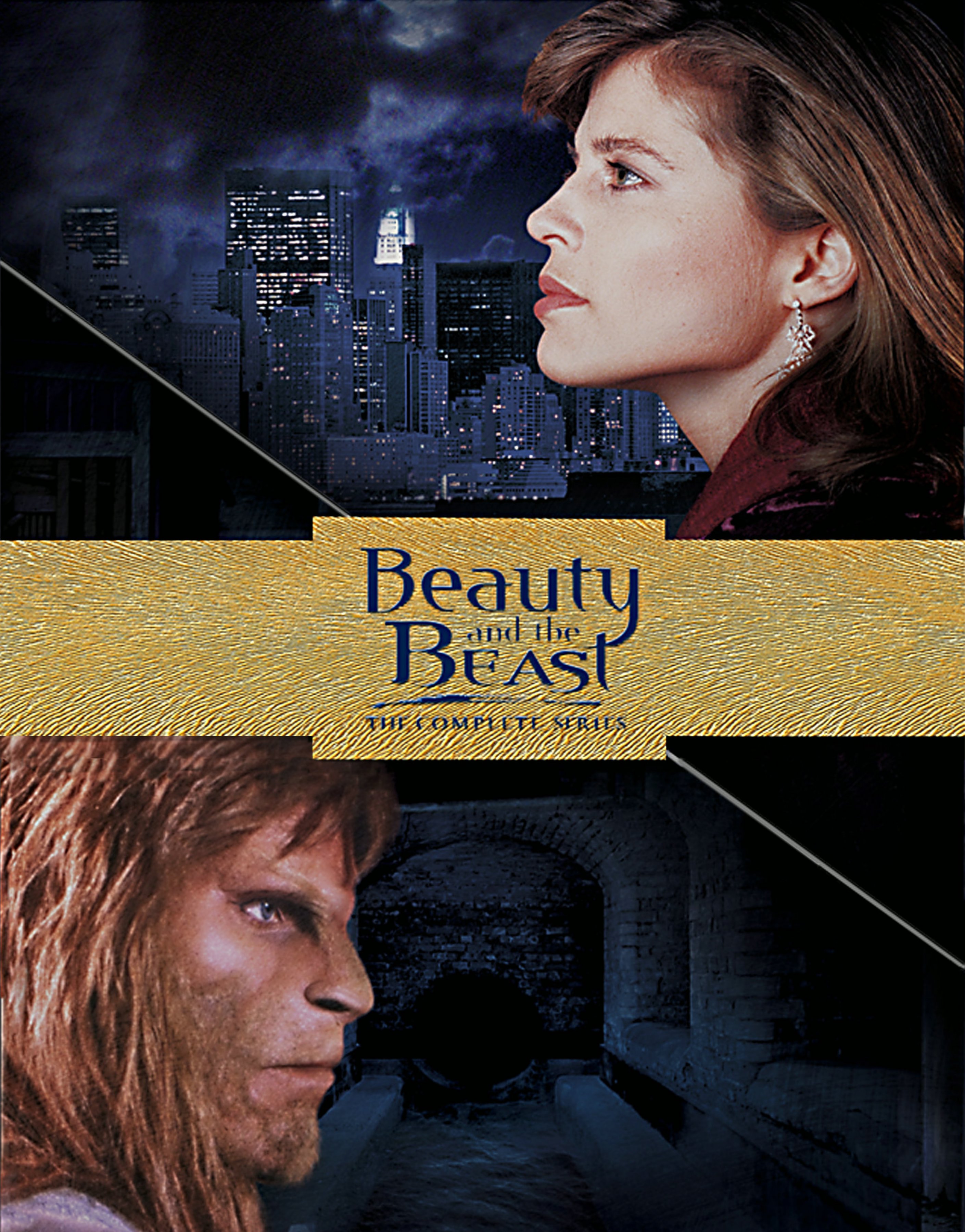 In 1987, television was evolving. Thanks to [[[Hill Street Blues]]], the way dramatic stories were presented became more complex, the storytelling more diverse and the stories more compressed. The subject matter was also starting to broaden, moving beyond cops, lawyers and doctors. It was just before the SF wave kicked off with [[[Star Trek: The Next Generation]]] but that didn’t stop CBS from trying something a little different.
On a Friday night, September 25, 1987, audiences were treated to a different look at the classic [[[Beauty and the Beast]]] tale. The series starred Ron Perlman as Vincent, the beast, a mutant of some sort, who comes to the rescue of Linda Hamilton’s Catherine, a rich girl turned assistant district attorney. Their connection became the stuff of fairy tale and from that pilot episode, their fates became inextricable.
It had all the lush romance of a Harlequin book and the action to keep spouses by their side. The series had its ups and downs, making a star out of Hamilton who left the series after just two seasons, derailing the eternal romance. Jo Anderson was brought in for the third season but that, coupled with CBS’s insistence on increased action for the males, hurt and the series came to an end in January 1990 (although the final two were run that summer). Its 56 episodes remain a testament to the creative vision of creator Ron Koslow and fantasist George R.R. Martin who wound up penning 13 of the episodes.
Paramount Home Video has released a 16-disc box set of the complete series and it shows its age. Beauty and the Beast has the look and feel of the 1980s without fully embracing the changing storytelling in television. The storytelling is slow, almost plodding at times, and each week they seemed to focus on some new social ill without really offering long-term solutions. The threats were fairly standard stuff for the most part, intertwined with the poetry between the characters. Complete with lush music, long, lingering gazes into character’s eyes, it was truly a romance novel brought to the screen.
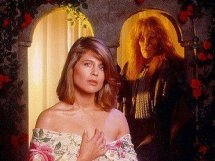 On the other hand, one is reminded all over again about how the show worked with the characters and was probably the first prime time series to introduce a unique mythology. Much of this unfolds during season two and strengthened the series overall.
Vincent came from the world below. Across the first season we got glimpses of where Vincent was raised and at first it appeared to be a place where the homeless gathered in the tunnels under the city. But, as we got to know Father (Roy Dotrice) and the other denizens, we learned there was so much more to the series. They communicated by tapping on the pipes with Pascal as the operator. (The series also gave us the first real glimpse of Armin Shimmerman’s gifts.) But not everyone who came to live below was as benevolent. No, there was John Pater, come to be known as Paracelsus, who helped build the society with Father, only to find they had different goals and Paracelsus was exiled and became a recurring threat to the entire civilization.
The World Below was clearly an idealized society, welcoming to all including the “deformed” Vincent, and people in need of help. We learned that they had tangible support from “Helpers” from Above, making their worlds interconnected in interesting ways.
Through it all, Vincent and Catherine saved one another, discussed their feelings with one another, and did everything in soft tones with strings playing in the background. Catherine wasn’t all weepy, though. After her attack, Catherine learned self-defense and became scrappy in a fight until she needed too-often saving by the feral Vincent.
The World Above had threats of its own including Stephen McHattie’s Gabriel who ran the drug running operation that led to Catherine’s death. He also took the love child of Vincent and Catherine which became the running line for the shortened third season.
Rewatching the series is mixed. Some of it is slow and meandering, while the romance remains strong. The DVDs come with little in the way of extras. Hamilton and Perelman introduce six of the season two episodes, taken from the original season set. A bonus disc has Vincent’s love letters to Catherine broken out with stock footage and superimposed florid script. Newly constructed letters are read by someone other than Perelman. An interactive game completes the disc but it’s largely a trivia game disguised as a quest to save Catherine (an all too common plot from the series).
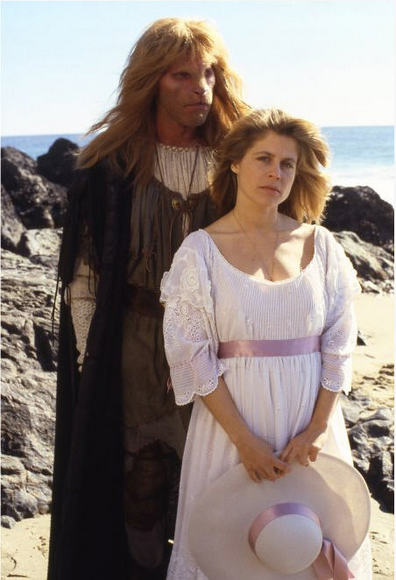 It’s a handsome box set and if you loved the show once upon a time, you’ll feel warm all over again. If you come seeing what all the fuss is about, bear in mind when it was made.On the other hand, one is reminded all over again about how the show worked with the characters and was probably the first prime time series to introduce a unique mythology. Much of this unfolds during season two and strengthened the series overall.
Vincent came from the world below. Across the first season we got glimpses of where Vincent was raised and at first it appeared to be a place where the homeless gathered in the tunnels under the city. But, as we got to know Father (Roy Dotrice) and the other denizens, we learned there was so much more to the series. They communicated by tapping on the pipes with Pascal as the operator. (The series also gave us the first real glimpse of Armin Shimmerman’s gifts.) But not everyone who came to live below was as benevolent. No, there was John Pater, come to be known as Paracelsus, who helped build the society with Father, only to find they had different goals and Paracelsus was exiled and became a recurring threat to the entire civilization.
The World Below was clearly an idealized society, welcoming to all including the “deformed” Vincent, and people in need of help. We learned that they had tangible support from “Helpers” from Above, making their worlds interconnected in interesting ways.
Through it all, Vincent and Catherine saved one another, discussed their feelings with one another, and did everything in soft tones with strings playing in the background. Catherine wasn’t all weepy, though. After her attack, Catherine learned self-defense and became scrappy in a fight until she needed too-often saving by the feral Vincent.
The World Above had threats of its own including Stephen McHattie’s Gabriel who ran the drug running operation that led to Catherine’s death. He also took the love child of Vincent and Catherine which became the running line for the shortened third season.
Rewatching the series is mixed. Some of it is slow and meandering, while the romance remains strong. The DVDs come with little in the way of extras. Hamilton and Perelman introduce six of the season two episodes, taken from the original season set. A bonus disc has Vincent’s love letters to Catherine broken out with stock footage and superimposed florid script. Newly constructed letters are read by someone other than Perelman. An interactive game completes the disc but it’s largely a trivia game disguised as a quest to save Catherine (an all too common plot from the series).
It’s a handsome box set and if you loved the show once upon a time, you’ll feel warm all over again. If you come seeing what all the fuss is about, bear in mind when it was made.












I agree about the storytelling. While I remember the series fondly (isn't nostalgia wonderous?), the stories were not as creative as I remembered and do not hold up well to repeated viewings.
A friend was fascinated by the series, to the point of publsihing B&B fanfiction zines and artwork (some of it PG or even R ratable).Her husband and i used toirritate her by speculating on whether the rest of Vincent's anatomy was as catlke as his face, and if so, if, like boy cats, he had stiff hairs in inconvenient places and what implications that might have when their relationship grew more intense…
Wasn't someone just lamenting the loss of comic book editors?Ron Perelman was the one who bankrupted Marvel (with some help).Ron Perlman was Vincent, admirably able to express his nuances through his voice and even behind the prosthetics of his makeup.I remember the series (only from reruns, especially in 3 hour blocks from the Christian Broadcasting Network –although the voodoo episode wasn't available then).I'd say that it had all the positive attributes of an excellent romance — whether between Catherine and Vincent (and sometimes third parties like Elliot Burch) or between us and that fantastic tunnel community beneath. The ghost story "When the Blue Bird Sings" or role playing game episode, or Siege, when Vincent had to step back for another, or the holiday of Winterfest, or… OK, I'm gushing. I liked the show, and kept a lookout for George RR Martin since. And let's not forget that the awards for the show were especially for the music, which added to the atmosphere. (But the superhero episodes, especially the third season, were failures.)
"Who edits the editors?"ed, if you're going to edit the spelling, you also have to edit out the repeated paragraphs. ;)
I figure the repeated paragraphs are computer glitches (and rather common in items at comicmix.com), and we all know that computers are Masters of the Universe (Jr. — to allow Mr. Davis' preeminence). So it would be heretical to criticize them.And in this case, it isn't merely spelling but two different persons who had impact on adventure fiction about that time, so I place more value to this glitch.But I see your point.
When Beauty and the Beast started, I told my then wife that it would likely be pretty good because George R. R. Martin was involved. I was right.But the story started to fall apart with Linda Hamilton's departure. The last season is pretty much not worth watching.
I just decided to buy seasons 1 and 2 after watching one of my favorite episodes on 'Joost', which is "A Happy Life. After Hamilton left the series went downhill…the premise was gone…and it started to get a little too mystic and creepy for me. But watching this episode brought it all back for me…the sets, the music. Much more innocent time. Can't wait to get the DVDs.
I love this series. I could not buy this series DVD in Thailand. Help me!!!